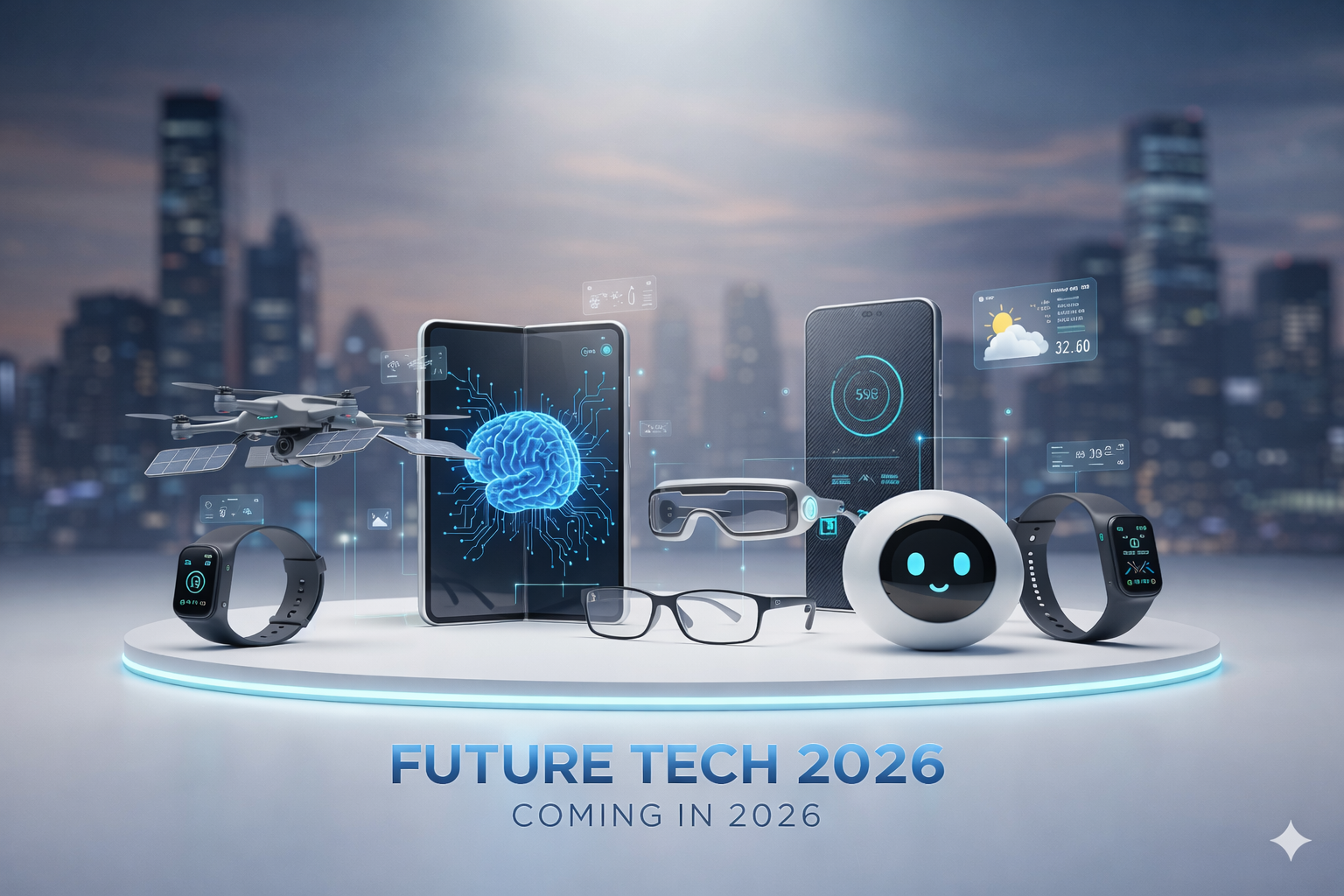
Future Forward: Exploring 2026's Cutting-Edge Gadget Innovations
The world of technology is in a perpetual state of flux, constantly pushing boundaries and redefining what's possible. At the heart of this relentless evolution lies the humble yet revolutionary
gadget. From its obscure origins as sailors' slang for an unnamed small part, the term "gadget" has transformed into a universal descriptor for ingenious, often compact, devices that blend practicality with novelty. Today, as we stand on the cusp of 2026, the landscape of innovation promises a new wave of gadgets that don't just upgrade existing technology but fundamentally reshape our interaction with the digital and physical world. If you're curious about the journey of these remarkable devices, delve deeper into
The Evolution of Gadgets: From Sailor Slang to Digital Dominance.
The year 2026 is poised to be a landmark for consumer electronics, a period where "early access to tomorrow" becomes a tangible reality for many. We're talking about a future where screens stretch rather than shrink, where your devices adapt to you, and where technology subtly integrates into the very fabric of your environment. This isn't just about faster processors or higher resolutions; it's about architectural engineering, predictive intelligence, and an immersive user experience that feels less like using a tool and more like interacting with an extension of yourself.
The Redefinition of Form Factors: Beyond the Fold
For years, the smartphone has dominated the personal electronics market, primarily defined by its rigid, rectangular form. But 2026 marks a radical departure, heralding an era where flexibility and adaptability are paramount. The concept of a screen is no longer confined to a flat pane of glass; instead, it becomes a dynamic, malleable canvas.
Imagine a laptop that literally rolls up into a compact cylinder, or a smartphone that doesn't just bend once but unfolds into a sprawling, tablet-sized display. This revolutionary shift is exemplified by innovations like Samsung's Tri Fold, which transcends the conventional foldable phone. Instead of simply bending in half, the Tri Fold incorporates three distinct panels that expand to create a truly expansive digital workspace. This isn't merely a larger screen; it's a spatial multitasking environment where you can run three live applications simultaneously, drag-and-drop content seamlessly across them, and immerse yourself in media that truly "breathes" with an unprecedented sense of scale. The engineering behind such devices is nothing short of architectural marvel, utilizing reinforced hinge mechanics and ultra-thin, durable layers that make sci-fi concepts feel incredibly close to reality.
These new form factors aren't just aesthetic improvements; they address genuine user needs for greater productivity and more immersive entertainment on the go. They challenge the very notion of a single-purpose device, pushing towards a future where your primary personal **gadget** can morph to suit any task, whether it's a quick message, a detailed presentation, or a cinematic viewing experience.
Invisible Tech: Seamless Integration into Daily Life
Beyond the physical transformation of devices, 2026 will see a significant shift in how technology interacts with our environment. The goal is to move beyond the frustration of tangled wires and complex interfaces, towards a world where technology is an invisible, intuitive presence. The promise that "Wi-Fi becomes invisible infrastructure rather than background frustration" speaks to a broader trend of ambient intelligence.
Consider a future where your home's connectivity isn't just a signal, but a pervasive, self-optimizing network that anticipates your needs. This philosophy extends to everyday objects, transforming them into intelligent **gadgets** that operate with a newfound autonomy. Your coffee machine, for instance, won't just brew coffee; it will learn your routines, predict when you need your morning caffeine fix, and even suggest new blends based on your preferences or local weather. This isn't about adding more buttons or screens to existing appliances; it's about embedding predictive AI and seamless connectivity so deeply that the technology fades into the background, enhancing your life without demanding constant attention.
This invisible integration simplifies daily routines, automates mundane tasks, and frees up mental bandwidth. It represents a paradigm shift from active interaction to passive benefit, where your surroundings are subtly working to make your life more convenient and enjoyable. However, this seamlessness also brings considerations about privacy and data collection – important aspects that innovators are already grappling with as these intelligent systems become more prevalent. To understand more about what defines these groundbreaking devices, check out
Gadgets Unpacked: Defining the Devices Shaping Modern Life.
Hyper-Personalized Wellness and Lifestyle Gadgets
The future of personal technology is profoundly intertwined with our health and well-being. By 2026, the lines between medical-grade diagnostics and consumer **gadgets** will further blur, leading to hyper-personalized wellness solutions. The reference to "beauty tech feels clinical" and "fitness wearables feel predictive" hints at a future where our devices offer incredibly detailed, actionable insights into our bodies and lifestyles.
Fitness wearables will evolve beyond mere step counts and heart rate monitoring. Leveraging advanced AI and sophisticated bio-sensors, these next-generation **gadgets** will offer predictive analytics, anticipating potential health issues before they manifest. Imagine a wearable that not only tracks your sleep but can predict impending fatigue or stress levels based on subtle physiological shifts, offering proactive advice for recovery or stress management. Similarly, beauty tech will move past generic recommendations, using advanced skin analysis and AI to create bespoke skincare routines and even custom-formulated products delivered directly to your home.
These innovations empower individuals with unprecedented control over their personal health journey. They provide continuous, non-invasive monitoring and offer personalized interventions, from nutrition plans tailored to your metabolism to mental wellness exercises adapted to your real-time emotional state. The value lies in moving from reactive care to proactive well-being, transforming our relationship with our health through intelligent, individualized **gadgets**.
The Core Essence of a 2026 Gadget: Innovation Meets Practicality
At its heart, a **gadget** is defined by its novelty, ingenuity, and specific practical purpose, often distinguishing itself through clever solutions to everyday needs. The 2026 innovations beautifully encapsulate this definition, pushing the boundaries of what these devices can be while retaining their fundamental utility. Whether it's the architectural engineering of a tri-fold phone or the predictive algorithms in a smart wearable, these future **gadgets** are not just "ambitious experiments" but also "refined evolutions" of established concepts.
They prioritize user convenience above all else, integrating multiple functions into portable forms that are designed for personal and on-the-go use. Unlike general-purpose tools or large household appliances, these future **gadgets** are characterized by their specialized, often whimsical engineering, solving niche problems efficiently and elegantly. They embody the "cutting-edge, sometimes covert technology" aspect that has historically been associated with the term, bringing advanced capabilities directly into the hands of consumers. The goal is to create devices that enhance daily productivity, enrich social connectivity, and personalize media experiences without being overly complex or burdensome.
Tips for Embracing the Gadget Revolution:
- Stay Informed: Keep an eye on tech news and reputable reviews to understand emerging trends and capabilities.
- Assess Your Needs: Before investing, consider how a new **gadget** genuinely improves your daily life or solves a specific problem for you, rather than just being a novelty.
- Prioritize Privacy: As devices become more integrated and data-driven, be mindful of privacy settings and data sharing policies.
- Seek Adaptability: Look for **gadgets** that offer versatility and can adapt to different uses, maximizing their long-term value.
- Consider Ecosystems: Evaluate how a new **gadget** fits into your existing tech ecosystem for seamless integration and ease of use.
In conclusion, 2026 is shaping up to be a pivotal year for **gadget** innovation, promising a future where our devices are more flexible, intuitive, and seamlessly integrated into our lives than ever before. From revolutionary form factors that defy traditional design to invisible AI that anticipates our every need, these advancements underscore the relentless pursuit of human ingenuity. While raising important questions about dependency and privacy, the forthcoming wave of **gadgets** is undoubtedly poised to redefine our interactions with technology, making our daily lives more efficient, connected, and profoundly personalized. The future, in essence, is not just arriving; it's unfolding in our hands.